Whether you're brand new to the gym or a seasoned athlete, understanding protein is foundational. Here's everything you need to know — no fluff, no filler.
What Is Protein?
Protein is one of three macronutrients — alongside carbohydrates and fat — that your body requires in relatively large amounts to function. But protein is unique. While carbs and fat serve primarily as fuel, protein is your body's main building material. It makes up muscle, skin, hair, hormones, enzymes, and immune cells.
Chemically, proteins are long chains of amino acids linked together by peptide bonds. Think of amino acids as individual LEGO bricks — your body assembles them in countless configurations to build and repair virtually every tissue in your body.
There are 20 amino acids in total. Nine of them are called essential amino acids (EAAs) because your body cannot produce them on its own — you must obtain them through diet or supplementation. The remaining 11 are non-essential, meaning the body can synthesize them as needed.

Why Does Protein Matter for Active People?
Exercise — especially resistance training — creates small tears in muscle fibers. Your body repairs and rebuilds these fibers through a process called muscle protein synthesis (MPS). For MPS to occur effectively, your body needs an adequate supply of amino acids, particularly the branched-chain amino acid leucine, which acts as the primary trigger for MPS.
Research published in the Journal of the International Society of Sports Nutrition consistently shows that protein intake is one of the strongest dietary predictors of muscle hypertrophy, strength gains, and recovery quality in active individuals. (1)
Protein also plays a central role in weight management. High-protein diets increase satiety hormones like GLP-1 and PYY while reducing the hunger hormone ghrelin, helping control caloric intake naturally. Additionally, protein has the highest thermic effect of food (TEF) — your body burns approximately 20–30% of protein calories during digestion alone, compared to just 5–10% for carbohydrates. (2)
How Much Protein Do You Actually Need?
General dietary guidelines often suggest 0.8 grams of protein per kilogram of bodyweight per day — but this figure is designed for sedentary adults, not athletes. Current sports nutrition research recommends significantly higher intakes for active individuals:
• Recreational exercisers: 1.4–1.6 g/kg of bodyweight
• Strength athletes and bodybuilders: 1.6–2.2 g/kg of bodyweight
• Endurance athletes: 1.4–1.7 g/kg of bodyweight
• Individuals in a caloric deficit: up to 2.4 g/kg to preserve lean mass
A 2017 meta-analysis published in the British Journal of Sports Medicine, examining over 1,800 participants, found that protein supplementation significantly increased muscle mass and strength gains when combined with resistance training, with benefits plateauing around 1.62 g/kg/day for most individuals. (3)
Complete vs. Incomplete Proteins: What's the Difference?
A complete protein contains all nine essential amino acids in sufficient quantities. Animal-based sources — such as meat, dairy, and eggs — are generally complete proteins. Plant-based sources are often incomplete, lacking one or more essential amino acids (though combining sources like rice and beans can create a complete amino acid profile).
When evaluating protein quality, scientists use the Protein Digestibility Corrected Amino Acid Score (PDCAAS) and the more modern Digestible Indispensable Amino Acid Score (DIAAS). By either measure, whey protein consistently scores among the highest of any protein source, making it the highest standard for supplementation.

Whole Food vs. Protein Supplements: Do You Need Both?
Whole foods should always form the foundation of your nutrition. Chicken, Greek yogurt, eggs, fish, legumes, and dairy are all excellent protein sources that come with additional nutrients — vitamins, minerals, healthy fats, and fiber.
That said, hitting your daily protein targets through food alone can be genuinely challenging — especially around training, during busy days, or when your appetite is suppressed post-workout. This is where a high-quality protein supplement earns its place: it's convenient, fast-digesting, precise in its macros, and easy to consume when whole foods aren't practical.
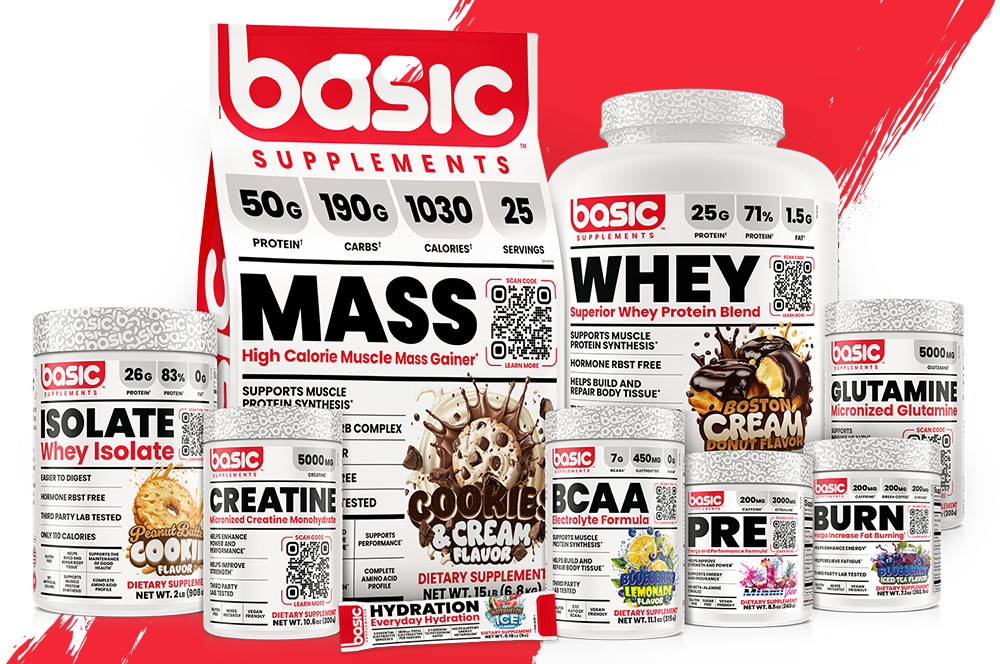
At Basic Supplements, we built our protein lineup around that exact philosophy. No unnecessary fillers or proprietary blends — just clean, transparent formulas that do what they're supposed to do.
Compare: Whey Concentrate vs. Isolate →
Timing: When Should You Eat Protein?
The concept of an "anabolic window" — the idea that you must consume protein immediately post-workout or you'll miss out on gains — has been significantly overstated. While post-workout protein is valuable, total daily intake matters far more than precise timing.
That said, distributing protein across 3–5 meals throughout the day (targeting 30–40 g per meal) appears to optimize MPS compared to consuming most protein in a single sitting, according to research from the University of Texas Medical Branch.
The Bottom Line
Protein is non-negotiable for anyone who trains seriously or simply wants to feel, perform, and look their best. Understanding your needs, choosing high-quality sources, and hitting your daily targets consistently will deliver more results than any training protocol alone.

References
- Jäger, R., Kerksick, C. M., Campbell, B. I., Cribb, P. J., Wells, S. D., Skwiat, T. M., Purpura, M., Ziegenfuss, T. N., Ferrando, A. A., Arent, S. M., Smith-Ryan, A. E., Stout, J. R., Arciero, P. J., Ormsbee, M. J., Taylor, L. W., Wilborn, C. D., Kalman, D. S., Kreider, R. B., Willoughby, D. S., Hoffman, J. R., … Antonio, J. (2017). International Society of Sports Nutrition Position Stand: protein and exercise. Journal of the International Society of Sports Nutrition, 14, 20. https://doi.org/10.1186/s12970-017-0177-8
- Leidy HJ et al. (2015). The role of protein in weight loss and maintenance. The American Journal of Clinical Nutrition, 101(6), 1320S–1329S.
- Morton RW et al. (2018). A systematic review, meta-analysis and meta-regression of the effect of protein supplementation on resistance training-induced gains in muscle mass and strength in healthy adults. British Journal of Sports Medicine, 52(6), 376–384.
- Phillips SM & Van Loon LJC. (2011). Dietary protein for athletes: From requirements to optimum adaptation. Journal of Sports Sciences, 29(S1), S29–S38.
- Stokes T et al. (2018). Recent Perspectives Regarding the Role of Dietary Protein for the Promotion of Muscle Hypertrophy with Resistance Exercise Training. Nutrients, 10(2), 180.







 Basic 101