The BCAA vs. EAA debate is one of the most common questions in sports nutrition. The science offers nuance — and neither has to be the enemy of the other.
A Quick Primer: What Are BCAAs and EAAs?
Before comparing them, let's be clear about what each term means.
Essential Amino Acids (EAAs) are the nine amino acids your body cannot produce on its own: leucine, isoleucine, valine, lysine, methionine, phenylalanine, threonine, tryptophan, and histidine. All nine must come from dietary sources or supplementation.
Branched-Chain Amino Acids (BCAAs) are a subset of EAAs — specifically leucine, isoleucine, and valine. The name refers to their chemical structure: each has an aliphatic side chain that branches, rather than forming a straight or ring shape. All three BCAAs are EAAs, but only three of the nine EAAs are BCAAs.
This relationship is important: every BCAA is an EAA, but not every EAA is a BCAA.

What Do BCAAs Do?
BCAAs have a unique metabolic distinction: unlike most amino acids, which are primarily metabolized in the liver, BCAAs are predominantly metabolized directly in skeletal muscle. This makes them rapidly available as fuel and signaling molecules during and after exercise.
Leucine, in particular, is the primary activator of the mTOR (mechanistic target of rapamycin) pathway — the intracellular signaling cascade that triggers muscle protein synthesis (MPS). Research consistently shows that leucine's presence above a certain threshold (approximately 2–3 grams per dose) is required to robustly stimulate MPS. (3)
Isoleucine and valine complement leucine by supporting glucose uptake into muscle cells during exercise, contributing to sustained energy production, and assisting in muscle nitrogen balance.
BCAAs have historically been popular for several reasons: they're well-studied, fast-absorbing, easy to take intra-workout without digestive discomfort, and their concentrated leucine content directly targets the muscle-building signaling pathway.(2)
What Do EAAs Do Differently?
EAAs provide everything BCAAs provide — plus the remaining six essential amino acids that BCAAs lack.
Here's the critical point: muscle protein synthesis requires all nine essential amino acids as raw materials. Leucine may pull the trigger on MPS, but without adequate supplies of lysine, threonine, methionine, and the other EAAs, your body cannot fully complete the protein-building process. It's like starting construction with a bulldozer but running out of concrete.
A landmark study published in the Journal of Nutrition (Wolfe et al., 2017) highlighted that while BCAAs alone can stimulate MPS signaling in the short term, they require the presence of other EAAs to sustain and complete the MPS process. (4) In a fasted state or when other amino acids are depleted, BCAA supplementation without the full EAA spectrum may produce a less complete anabolic response.
Additionally, EAAs support a broader range of physiological functions beyond muscle building — tryptophan contributes to serotonin and melatonin synthesis (mood and sleep), histidine supports carnosine production (muscle acid buffering), and phenylalanine contributes to dopamine production (focus, motivation).
The Research: Where Does the Science Land?
Several well-designed studies have compared BCAA and EAA supplementation directly:
• A 2017 study in Frontiers in Physiology found that EAA supplementation produced a significantly greater MPS response than BCAAs alone when administered at equivalent doses. (1)
• Research from the University of Texas Medical Branch demonstrated that EAAs stimulate muscle protein anabolism in both young and elderly subjects, while BCAA-only supplements showed a more limited and less sustained response.
• A 2018 review in the Journal of the International Society of Sports Nutrition (Wolfe) noted that while leucine's role in initiating MPS is well-established, the absence of other EAAs ultimately limits how much protein synthesis can be completed. (4)
It's important to be fair to BCAAs, though. The research supporting BCAA supplementation in specific contexts is genuine. BCAAs have demonstrated utility in reducing exercise-induced muscle damage, decreasing perceived muscle soreness (DOMS), providing energy during endurance exercise, and supporting training in a fasted state — particularly when full protein intake isn't possible.
Context Matters: When to Use Each
BCAAs May Be More Appropriate When:
-
Training fasted and looking for a light, easy-to-digest intra-workout support
-
Sipping during long sessions to reduce fatigue and muscle catabolism
-
You're already getting adequate complete protein from meals and just want intra-workout support
- Managing caloric intake and looking for a low-calorie amino acid supplement
EAAs May Be More Appropriate When:
- You want comprehensive amino acid support, especially if complete protein timing around training is difficult
- Recovering from intense or high-volume training where full MPS support is the goal
- You want to maintain an anabolic environment between meals
- Your dietary protein quality or quantity is limited
Do You Need Either If You're Already Eating Enough Protein?
This is the most honest question — and the most honest answer is: it depends on your situation. If you're consuming 1.6–2.2 g of protein per kg of bodyweight daily from high-quality complete sources (like whey protein), your EAA needs are largely being met through your diet.
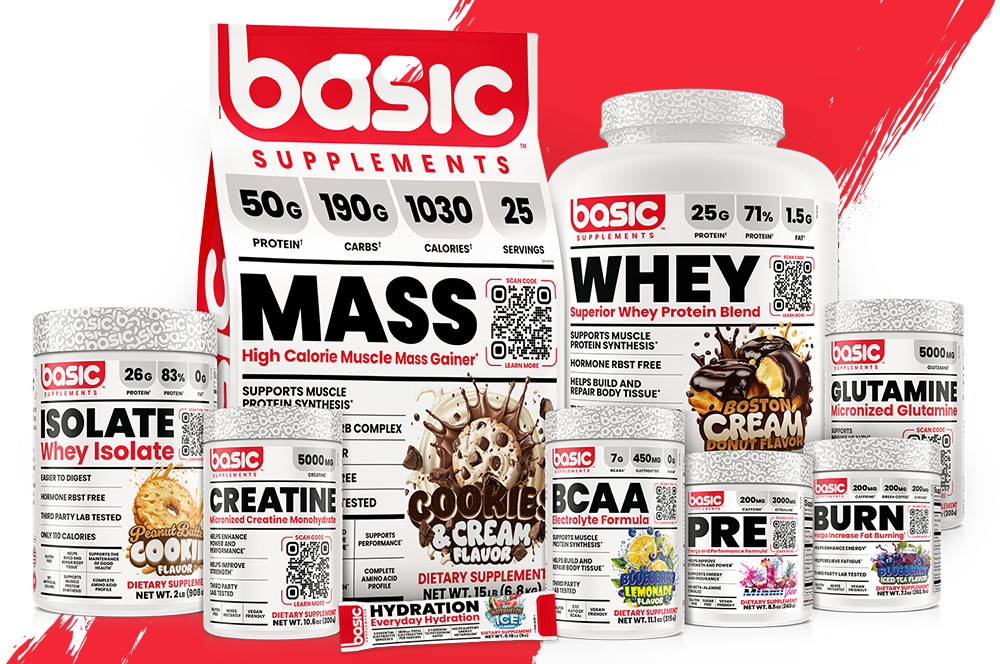
That said, dedicated amino acid supplementation offers timing advantages — particularly around training — that whole food protein can't always match. A scoop of Basic BCAA during a tough session delivers targeted support without the digestive load of a full meal. For athletes training hard, the marginal benefit is real.
The key takeaway: neither BCAAs nor EAAs are inherently superior. They serve different purposes, and the "best" choice depends on your total diet, training demands, and goals.

References
-
Ferrando AA et al. (2010). EAA supplementation to increase nitrogen retention in hospitalized patients. JPEN Journal of Parenteral and Enteral Nutrition.
-
Jackman SR et al. (2017). Branched-Chain Amino Acid Ingestion Stimulates Muscle Myofibrillar Protein Synthesis following Resistance Exercise in Humans. Frontiers in Physiology, 8, 390.
-
Plotkin DL et al. (2021). Isolated Leucine and Branched-Chain Amino Acid Supplementation for Enhancing Muscular Strength and Hypertrophy. Journal of Strength & Conditioning Research, 35(10).
-
Wolfe RR. (2017). Branched-chain amino acids and muscle protein synthesis in humans: myth or reality? Journal of the International Society of Sports Nutrition, 14, 30.










 Basic 101